Gutter Installation for Auburn Valley and Plateau Homes
Valley Floor to Plateau Grade
Stretched between the flat Green River valley floor and the rising plateau neighborhoods to the east, Auburn covers a wider range of terrain than most south King County cities, and that span shapes how gutter systems have to perform. Valley homes sit on level ground where water cannot move on its own, while plateau lots on Lea Hill and West Hill carry the faster runoff that comes with elevation and slope. A system that suits one of those settings is wrong for the other, so reading the specific lot is where any sound installation starts. The housing stock is just as varied, mixing older valley homes with extensive newer subdivisions on the plateau, and each roof type sheds water in its own way. Gutter installation across Auburn means matching capacity, pitch, and downspout strategy to whether a home faces standing water on flat ground or fast runoff down a grade. We measure each roofline, account for the terrain it sits on, and spec the system accordingly. Owners on the valley floor who have seen water pool against a slab, and plateau owners who have watched runoff race down a lot, both understand why the approach has to fit the ground. The result is a drainage path engineered for the actual conditions in front of it, protecting the home through every wet month Auburn delivers.
Matching the System to the Ground
Property owners throughout Auburn face the same long rainy season whether they sit in the valley or up on the plateau, but the way that rain behaves differs sharply between the two. On the flat valley floor, water has to be carried decisively away because the ground will not move it, while on Lea Hill and the other plateau neighborhoods, the challenge is controlling runoff that picks up speed on the grade. Across both, the fine Douglas fir needles common to the region pack into ordinary screens and force overflow when rainfall peaks, so we fit micro mesh guards sized to block that debris while passing high volume rain. The newer subdivisions that have expanded Auburn's footprint bring larger roof areas that generate more concentrated runoff, which the gutter and downspout sizing has to account for. Older valley homes often carry aging steel gutters that have lost their pitch or rusted through, and replacement is usually the practical move once a run starts failing. Whether the work is on level ground or a slope, the constant is drainage tuned to how water actually behaves on that particular terrain under sustained loading. We bring that read to every Auburn property, matching material, capacity, and guard strategy to the roofline and lot so the finished system holds up across the city's varied ground through the wet season.
Systems Sized to Valley or Plateau
Seamless aluminum anchors gutter work across Auburn, and forming each run on site keeps joints at corners and outlets where leaks are least likely to start. On the valley floor, where water depends entirely on the gutter to move it, removing mid run seams eliminates the leak points that fail first, while on the plateau the same seamless construction stands up to the faster runoff coming off a grade. We measure each roofline directly, form the gutter to exact length, and set the pitch so water reaches the downspouts decisively rather than standing in the channel. The range of homes here, from older valley houses to newer plateau subdivisions, means hanger spacing and profile get matched to the load each roof actually carries. Aluminum suits the Auburn climate because it resists constant moisture without rusting, stays light on the fascia, and takes baked finishes that match existing trim. Hanger spacing is set to carry a full run through a heavy storm, since a sagging gutter loses its pitch and starts to overflow. For valley homes that have struggled with pooling and plateau homes that have battled fast runoff alike, getting the seamless run and its slope right is the single change that makes the most difference. The finished system performs quietly through the long wet season rather than becoming one more thing the owner watches every time the rain settles over Auburn.
Systems Sized to Valley or Plateau
Gutter guards prove their worth across Auburn wherever the fine Douglas fir needles common to the region pack into a run, and that holds true on both the valley floor and the wooded plateau lots to the east. The problem with ordinary screens is that needles slip through and clog the channel, and whether a home sits on flat ground or a grade, that buildup forces overflow the moment a sustained storm arrives. We fit micro mesh engineered to block needle debris while passing the high volume rain a Western Washington winter delivers, so the system keeps flowing when it matters. Before any guard goes on, we confirm the underlying gutters are sound and correctly pitched, because a guard over a failing run only hides the problem. Plateau lots backing onto greenbelt or shaded by mature evergreens see the heaviest debris load and gain the most from the upgrade, often cutting cleaning frequency substantially. On the valley floor, keeping the run clear is just as important, since a clogged gutter on flat ground sends overflow straight against the foundation. Guards cut the organic matter that moss feeds on and that clogs downspouts, though periodic checks keep the mesh clear of fine surface debris. We size each system to the roof area it serves so water sheds properly even during back to back storms. For Auburn owners tired of clearing packed needles, a well fitted guard system is the most direct path to gutters that keep working through the season.
Systems Sized to Valley or Plateau
Gutter replacement becomes the practical choice across Auburn once a run starts failing in more than one place, and on the older valley homes especially, aging steel systems reach that point sooner than owners expect. When gutters sag, leak at the seams, or rust through, chasing individual repairs costs more over time than replacing the run outright. We remove and dispose of the old system completely, then inspect the fascia for the rot that leaking gutters so often cause, flagging any boards that need attention before new runs go up. Replacement is also the right moment to upgrade material, moving from tired steel to seamless aluminum or copper for better lifespan and a cleaner look on the home. On the valley floor, a failing run shows itself fast as pooling against the slab, which makes timely replacement a matter of protecting the structure rather than just appearance. Plateau homes face their own timing, since runoff on a grade exposes a weak gutter quickly during a sustained storm. We size the replacement system to the specific roofline and terrain, whether that means standard runs for a level valley lot or heavier capacity for a plateau elevation. The result is a fresh, properly pitched system built for the rain Auburn actually gets, replacing one that had stopped doing its job before the next wet season arrives.
Comprehensive Gutter Installation Services in Renton
Tailored to Your Needs
From seamless installs to guards, repairs, and maintenance, we cover the full range of gutter needs Renton homes face. Every service is grounded in how Pacific Northwest rain, moss, and evergreen debris actually behave on local rooflines.
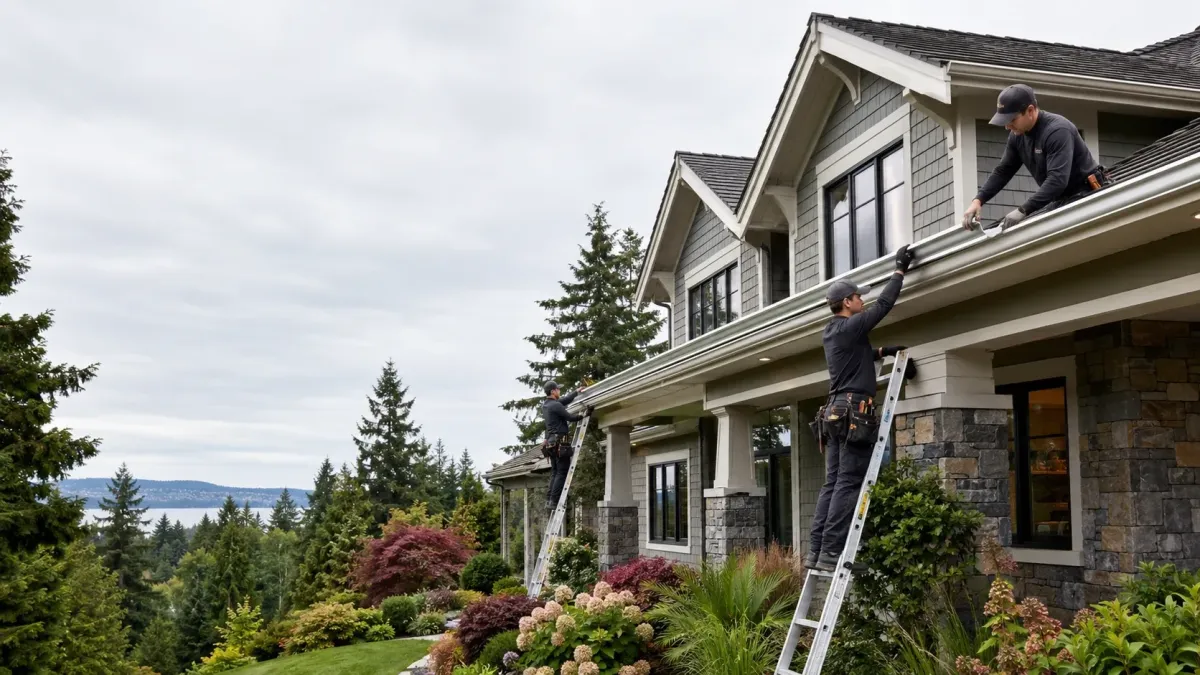
Single piece seamless gutters formed on site to eliminate leak points along your Renton rooflines.
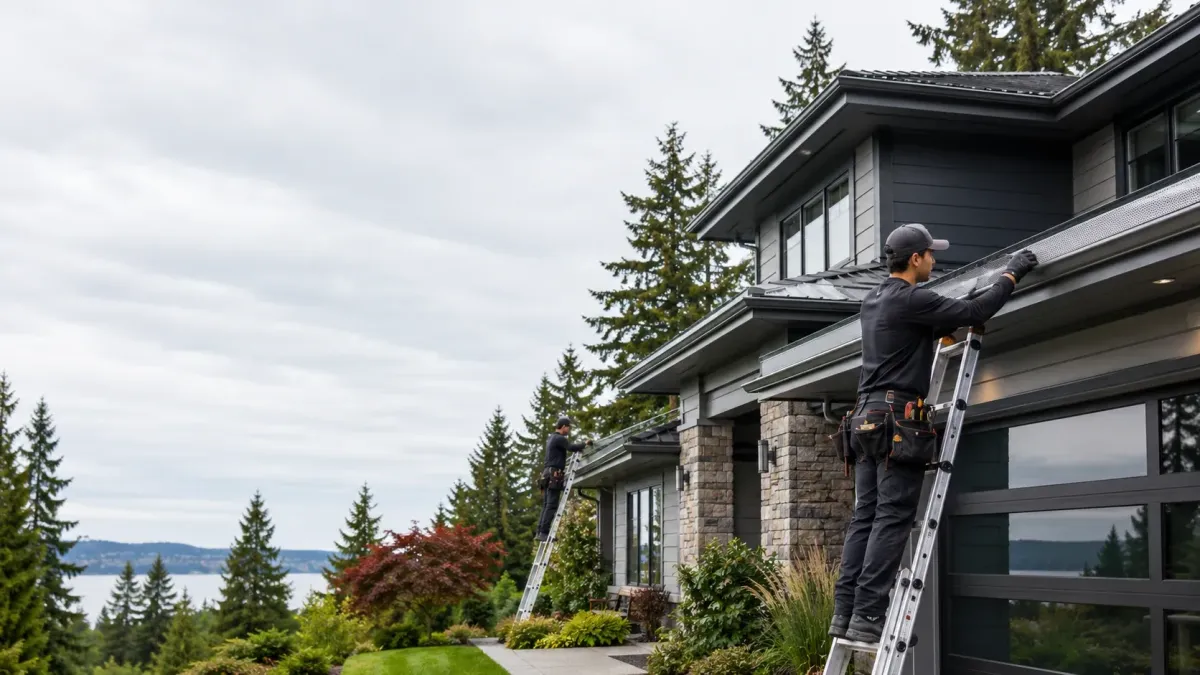
Micro mesh guard systems engineered to block Douglas fir needles and slow moss buildup.
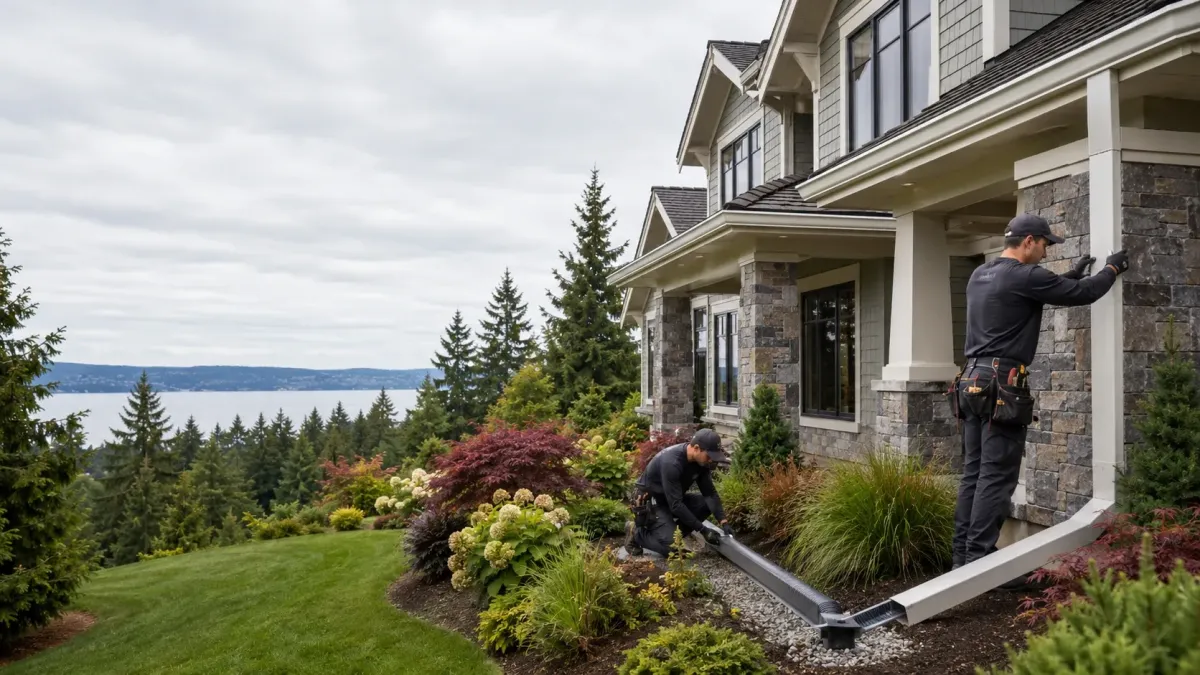
Properly sized downspouts and extensions that move heavy rainfall away from your foundation.
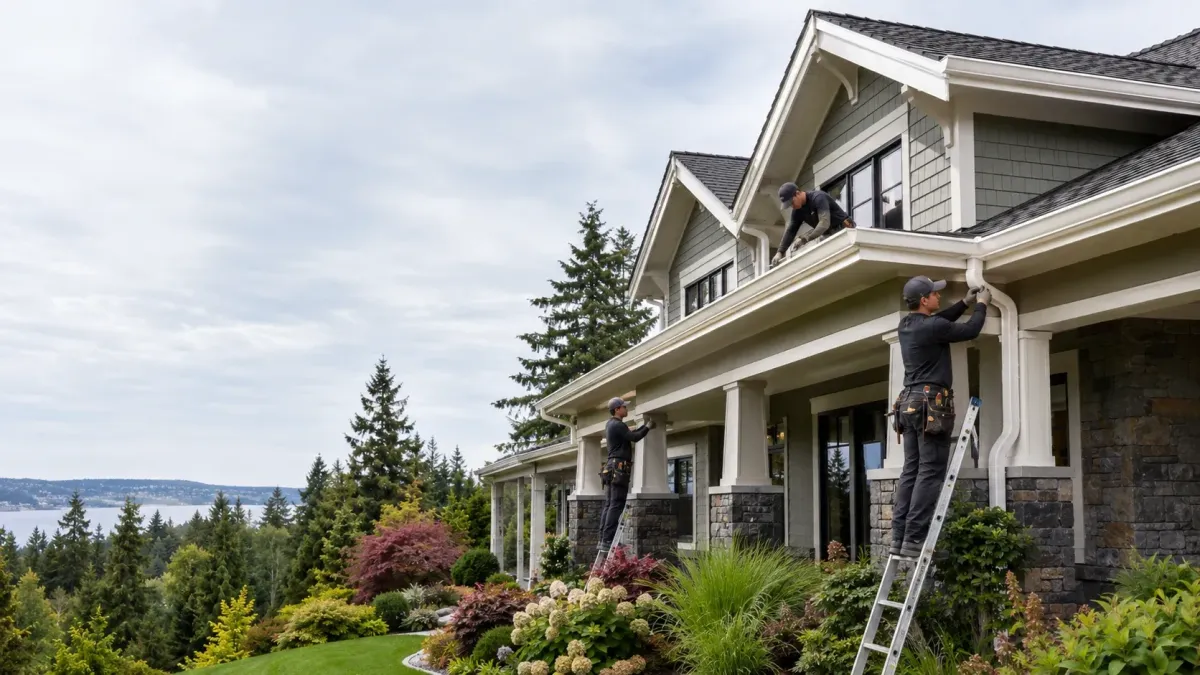
Full removal and replacement of failing gutters with systems built for the wet season.
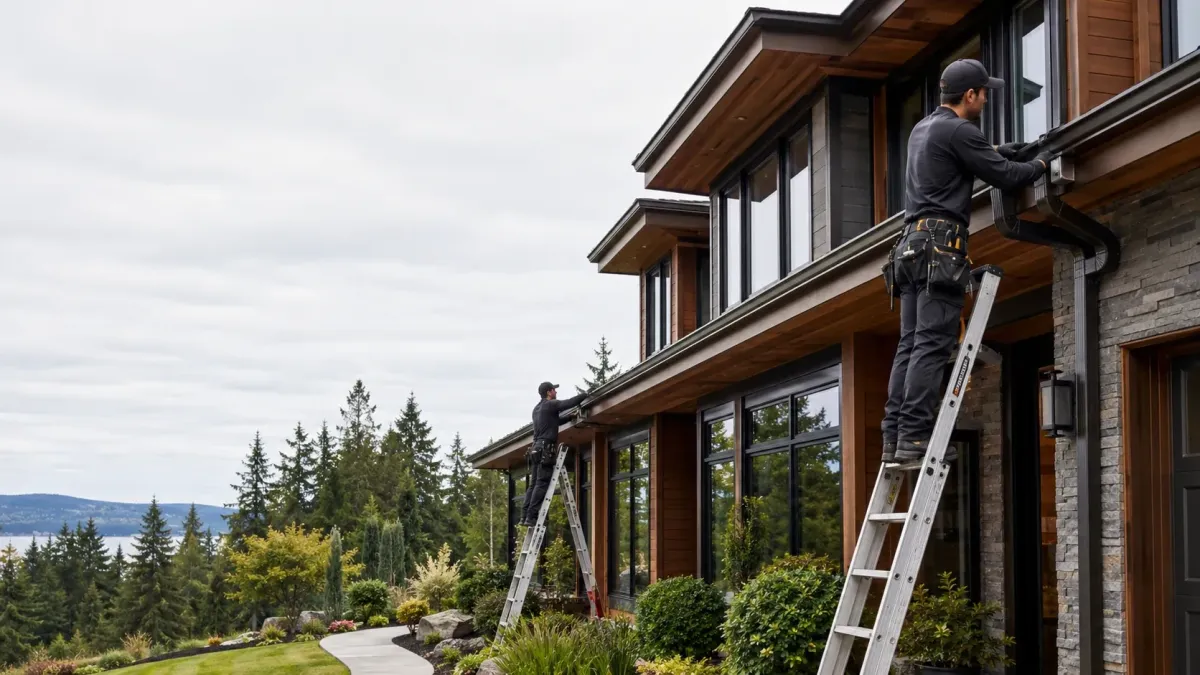
Durable, cost effective aluminum gutters that resist Pacific Northwest moisture and rust.
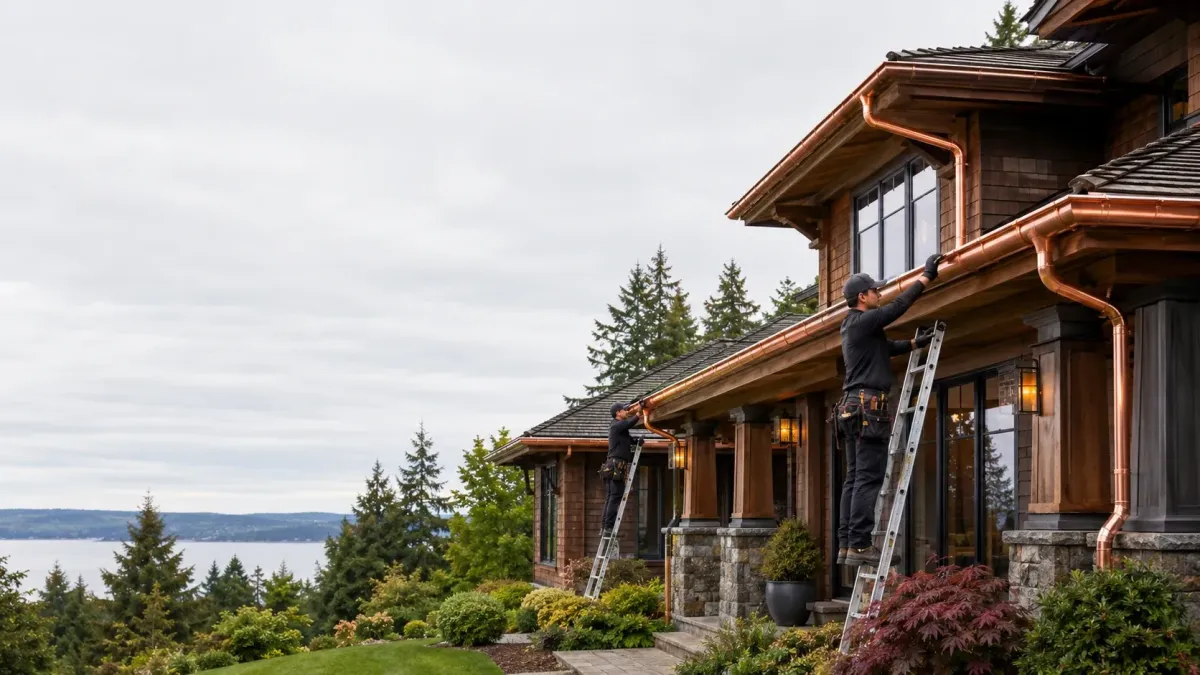
Soldered copper gutters offering decades of longevity and timeless curb appeal.
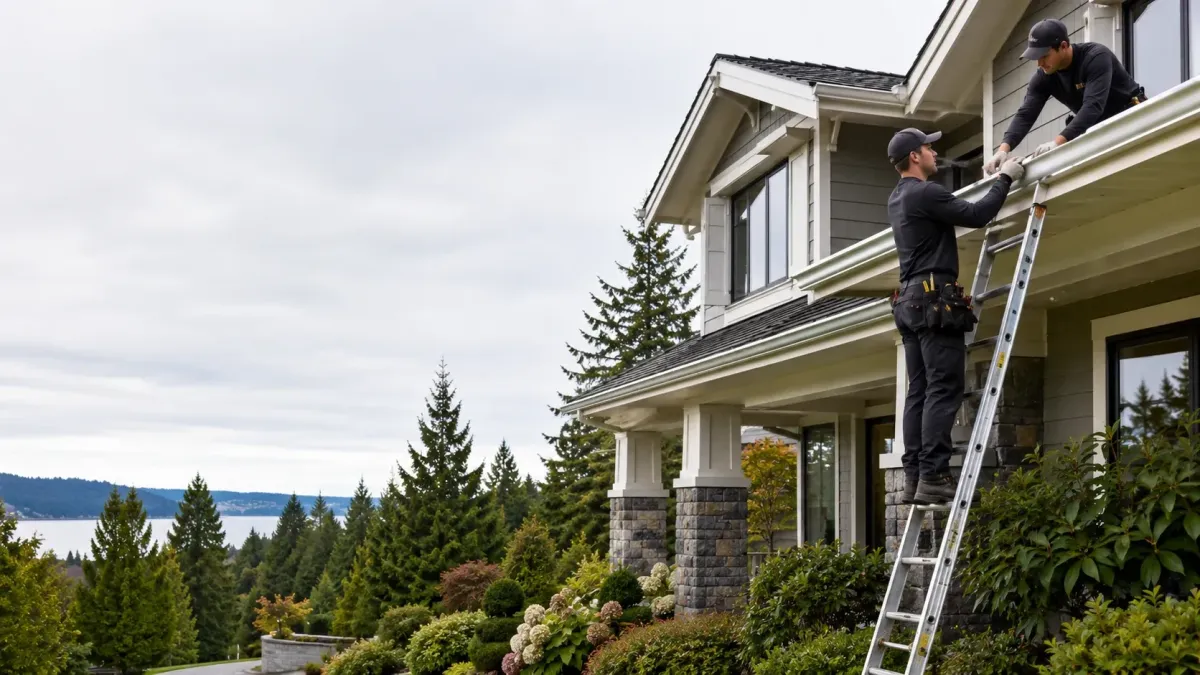
Fast fixes for leaks, sagging, and pitch problems before they damage your home.
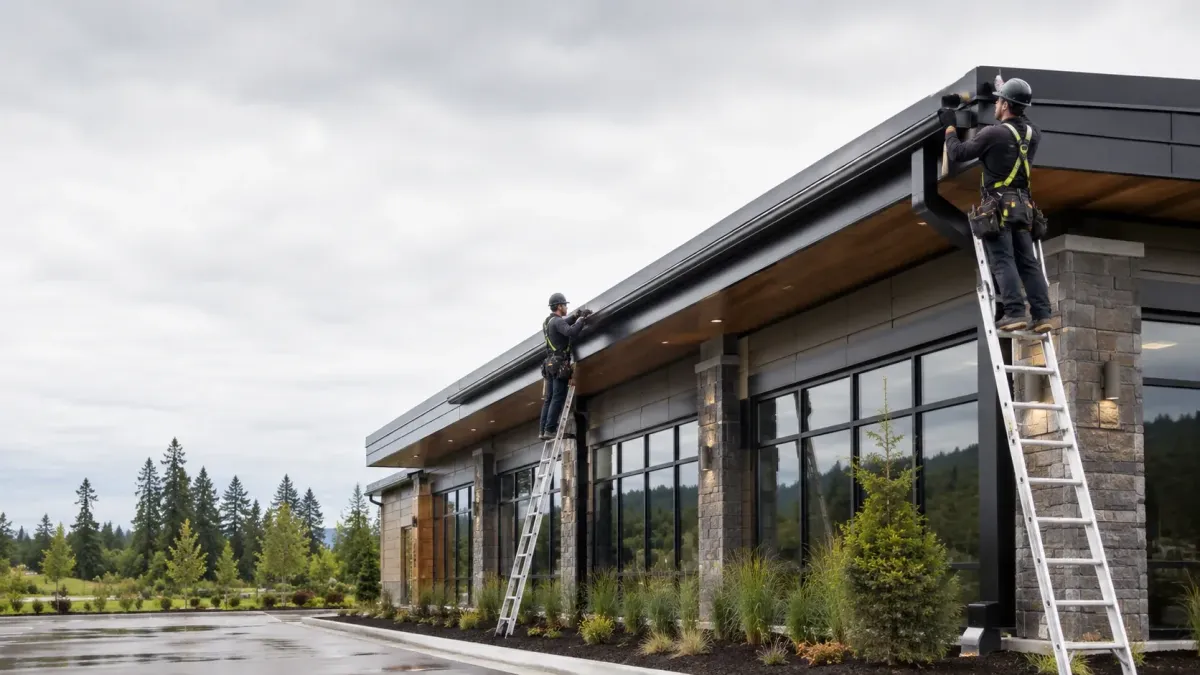
Higher capacity gutter systems designed for Renton commercial and multi unit roofs.
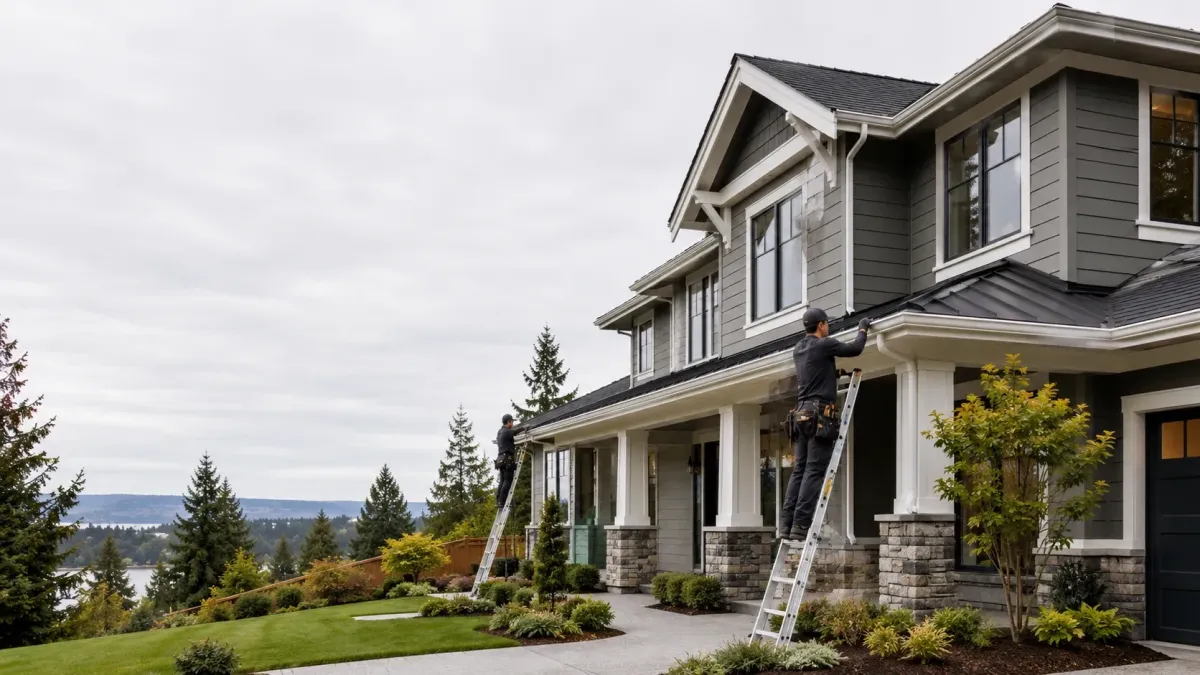
Builder coordinated gutter installation integrated into your new construction timeline.
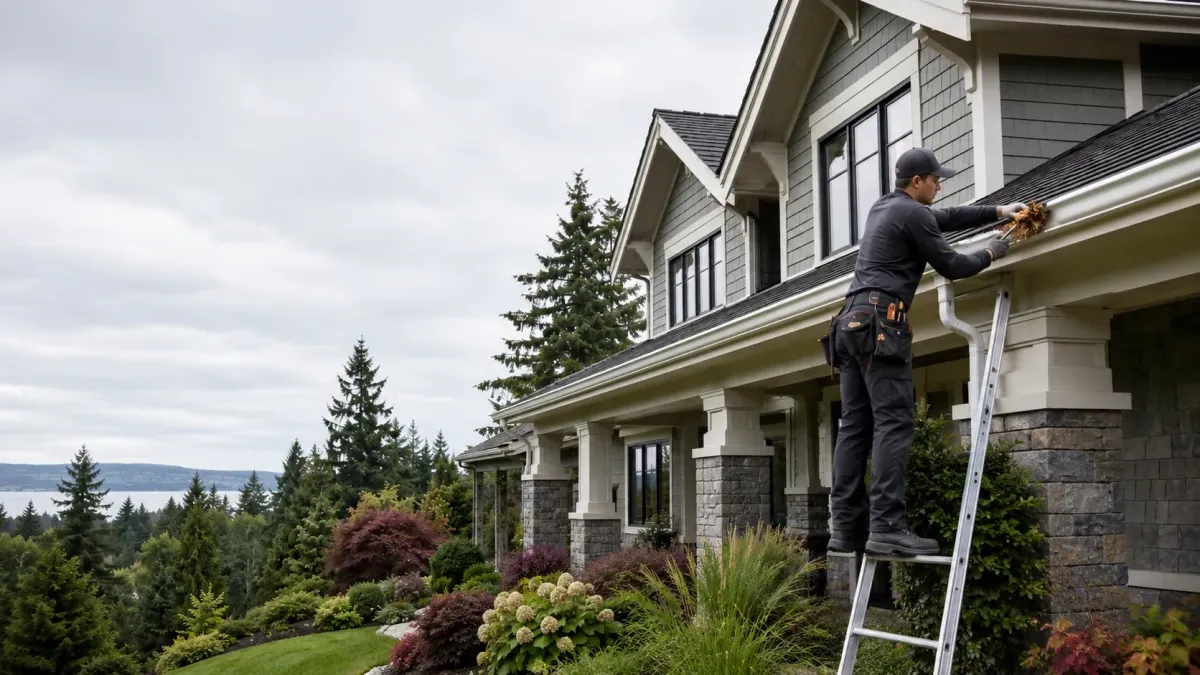
Seasonal cleaning and inspection tuned to Renton's needle drop and moss cycles.
Frequently Asked Questions
Gutter Installation can be complex, and we’re here to provide answers to common questions. Here are some frequently asked questions from our clients.
Frequently Asked Questions about Gutter Installation Renton, WA
How much does gutter installation cost in Renton?
Most Renton gutter installations run between 6 and 14 dollars per linear foot depending on material, with aluminum on the lower end and copper at the top. Two-story hillside homes near the Renton Highlands cost a bit more because of access. We provide a free written quote after measuring your roofline so there are no surprises.
What gutter size handles Renton rainfall best?
With the Pacific Northwest seeing heavy sustained rain through fall and winter, we recommend 6 inch seamless gutters paired with 3 by 4 inch downspouts for most Renton homes. The larger profile moves water faster off steep roof pitches and reduces overflow during the back to back storms common across the Cedar River valley.
How often should gutters be cleaned in Renton?
Twice a year is the baseline for Renton, once in late fall after the Douglas fir needles and big leaf maple drop, and once in spring to clear moss and seed debris. Homes shaded by evergreens or backing onto greenbelt areas often need a third pass, which is why many owners add gutter guards.
Do you handle moss and needle buildup specific to Western Washington?
Yes. Fine Douglas fir needles and moss are the two biggest clog sources in Renton, and standard screens often fail against them. We fit micro mesh guard systems sized for needle debris and treat existing moss buildup so your downspouts keep flowing through the wet season.
Are you licensed to work in Renton and King County?
We carry the proper Washington state contractor registration and follow King County and City of Renton permit requirements where they apply, such as work tied to new construction or drainage tie ins. You can reach us anytime to confirm scope before we start.
How long does a typical gutter installation take?
Most single family Renton homes are completed in one day. Seamless runs are formed on site to your exact rooflines, then hung, sealed, and tied into downspouts the same visit. Larger hillside or multi roofline properties may extend into a second day, which we confirm during the quote.
Need Gutter Installation?
What Our Satisfied Clients Have to Say About
We pride ourselves on delivering great results and experiences for each client. Hear directly from home and business owners who’ve trusted us with their Gutter Installation needs.

They replaced our failing gutters before the fall rains hit and sized everything for our shaded Highlands lot. No more overflow, and the fir needle guards have been worth every penny.
Marcus Whitfield
Honest crew that explained why our old downspouts could not keep up with Renton rain. The new seamless aluminum looks clean and finally moves water away from the foundation.
Priya Anand
We had copper installed on our Newcastle home and the workmanship is excellent. They soldered every joint and the patina is starting to come in beautifully.
Daniel Brennan
The Trusted Gutter Installation Expert Near You
Ready to hear more about expert services at ?
Contact us today to receive a detailed, no-obligation quote.
Privacy Policy | Terms & Conditions